
Nutrition · Protein
The protein tracker app that does the counting.
Health AI is a protein tracker app for iPhone. It sets a daily protein target from your weight, counts every gram you log — from a photo of your plate, a nutrition label, a barcode or the UK's own food tables — and shows how much is left today.
- 3 days free
- Then £9.99 a month
- Cancel any time in your Apple account
Your target
How much protein should you eat a day?
The UK's Reference Nutrient Intake for adults is 0.75 g of protein per kilogram of body weight a day: about 56 g for men and 45 g for women. For athletes, the American College of Sports Medicine suggests 1.2 to 2.0 g per kilogram, while the Department of Health has advised adults to avoid more than twice the reference intake.
The UK and athlete figures above come from the British Nutrition Foundation's guide to protein.
Health AI works your target out from your weight and the macro split you pick when you start. Pick the Balanced split the app recommends and you start at 1.5 g per kilogram: twice the UK reference intake, the most the Department of Health advises, and within the American College of Sports Medicine's range for athletes. If you don't train, you can set a lower target in Nutrition → Settings → Protein. Above a BMI of 25, only a third of the weight over that line counts. Worked out for you, it is capped at 35% of your calories but never set below 0.8 g per kilogram, and it follows your weigh-ins until you change your calories or any macro by hand; Reset to recommended turns that back on.
| Macro split | Protein per kg of body weight | A day at 70 kg |
|---|---|---|
| Balanced (the app's default) | 1.5 g | 105 g |
| High Protein | 2.2 g | 154 g |
| Low Carb | 2.0 g | 140 g |
| High Carb | 1.5 g | 105 g |
| Keto | 1.5 g | 105 g |
At 70 kg with a BMI under 25, unless that would be more than 35% of your calories. High Protein and Low Carb go past the UK advice on purpose, for people who choose more protein. Carbs and fat share the rest. If you are pregnant, breastfeeding, or have kidney disease or another medical condition, ask your GP or a dietitian what your number should be.
Logging
Four ways to log protein without typing it in.
The slow part of tracking protein is finding the number. Health AI finds it for you, four ways, and you check it before it is saved.
A plate
Photograph it and the scan estimates the whole plate's protein from what it can see, with a note on what was hardest to judge.
A label
Point it at the nutrition panel and the protein is read off the label itself, with fibre, sugar and salt, for you to check.
A barcode
Scanned against Open Food Facts and USDA's branded foods. A barcode never uses one of your scans.
A UK food
Search 2,854 foods from CoFID, the UK government's own food tables, and 7,793 more from the USDA, even with no signal.
Which way should you log it?
Use the barcode or the label for anything packaged, because those are the maker's own figures. Photograph home-cooked meals, where the scan estimates the plate for you to check. Search the UK food tables for loose foods like chicken breast or lentils, and save what you eat often as a meal.
| What you are eating | Log it with | Where the protein figure comes from |
|---|---|---|
| A yoghurt, a protein bar, a ready meal | The barcode, or the label if it will not scan | The maker's own figures |
| A meal you cooked | A photo of the plate | An estimate of the whole plate, for you to check |
| Chicken breast, eggs, lentils | Search | The UK's food tables (CoFID), or the USDA's |
| The breakfast you have every day | A saved meal | Whatever you saved, in one tap |
| A number you already know | Quick add | You |
Photo and label scans come out of a monthly allowance: 200 a month, 30 during the free trial. Barcodes, search and saved meals never do.
Grams left
See how much protein is left, wherever you look.
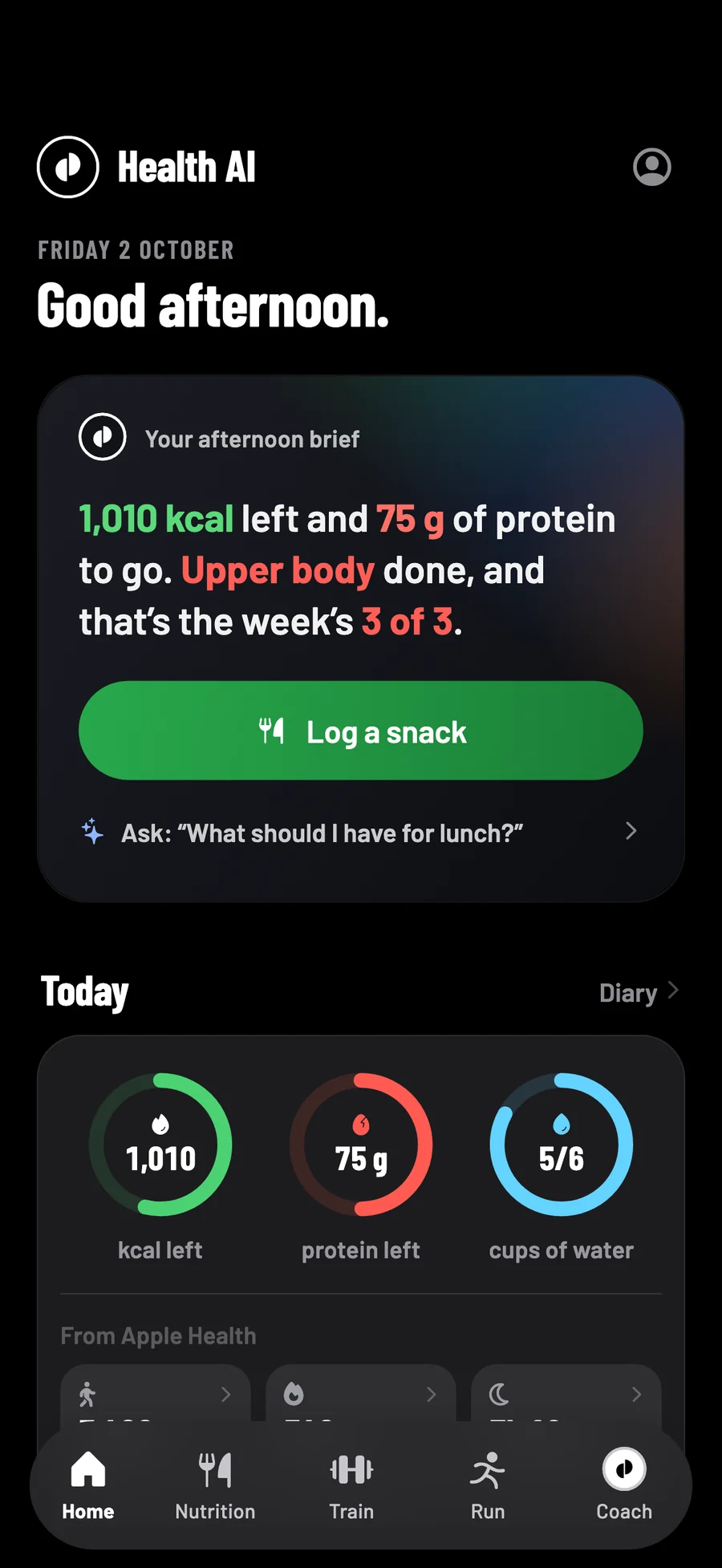
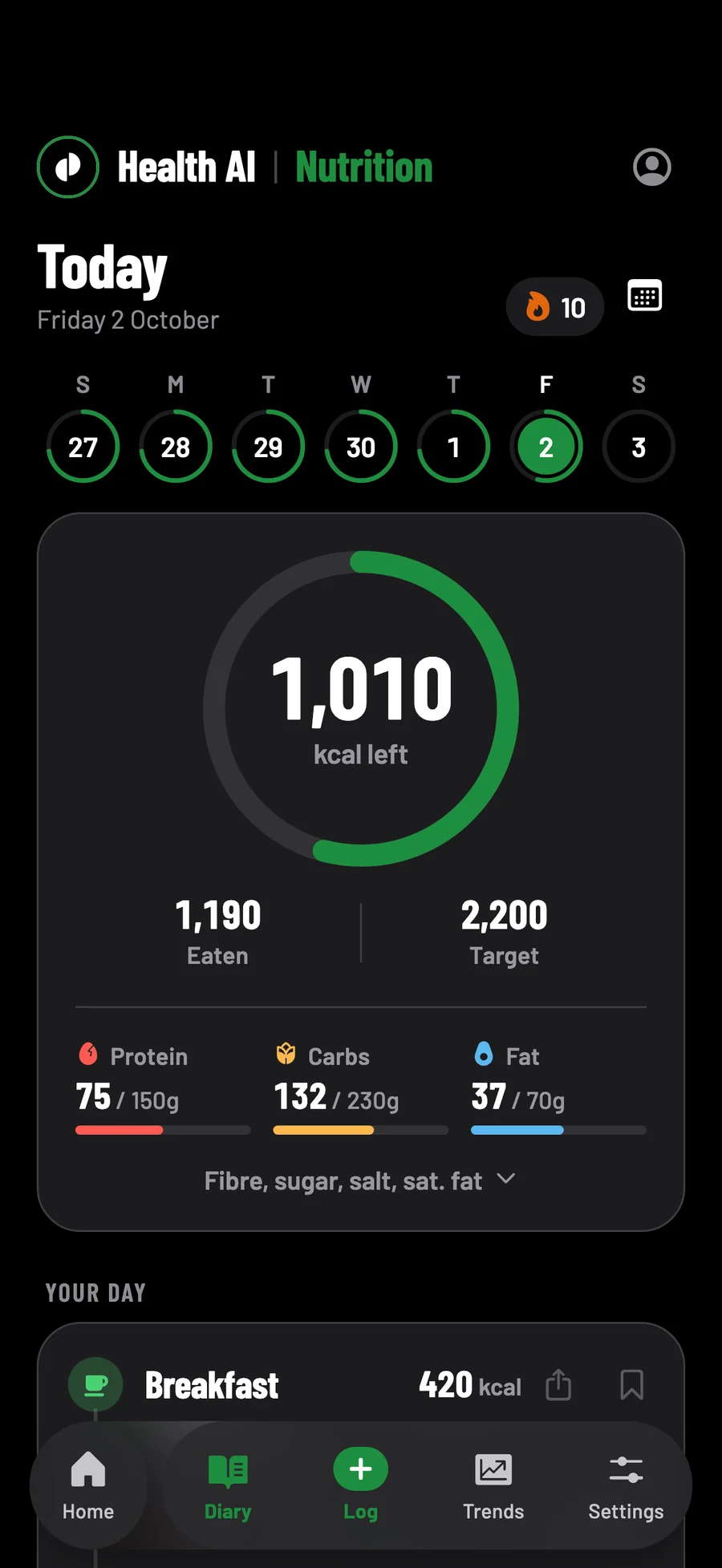
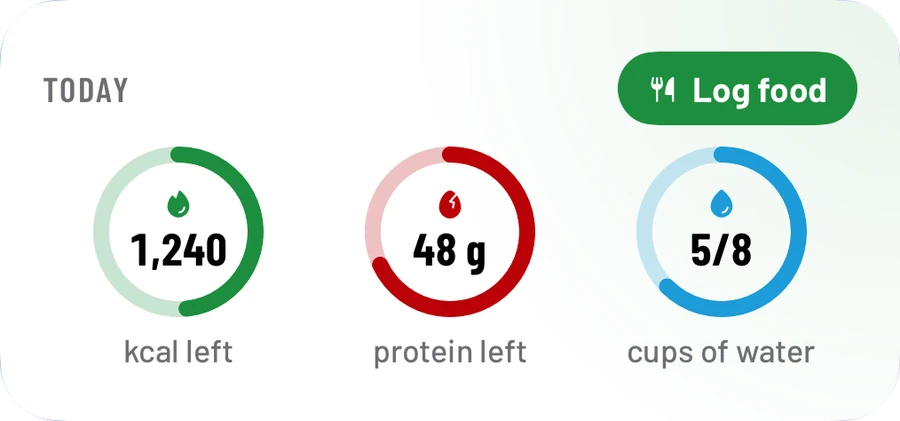
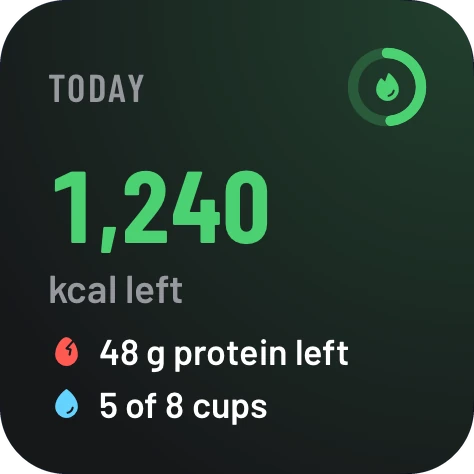
On Home, a ring counts down the grams you still need — "48 g protein left" — and says Done when you get there. The diary shows protein against your target, and every food you logged says what it added.
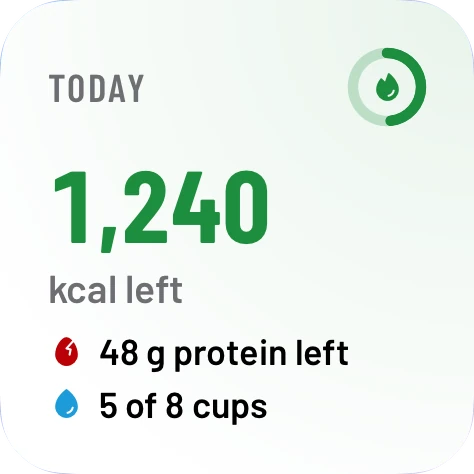
The Daily Brief says it in words, "75 g of protein to go", and the same number is on your Home Screen widgets, the rectangular Lock Screen widget and your Apple Watch. If you allow it, each day's protein is saved to Apple Health too.
- Home ring
- Diary
- Widgets
- Apple Watch
- Apple Health
Coach
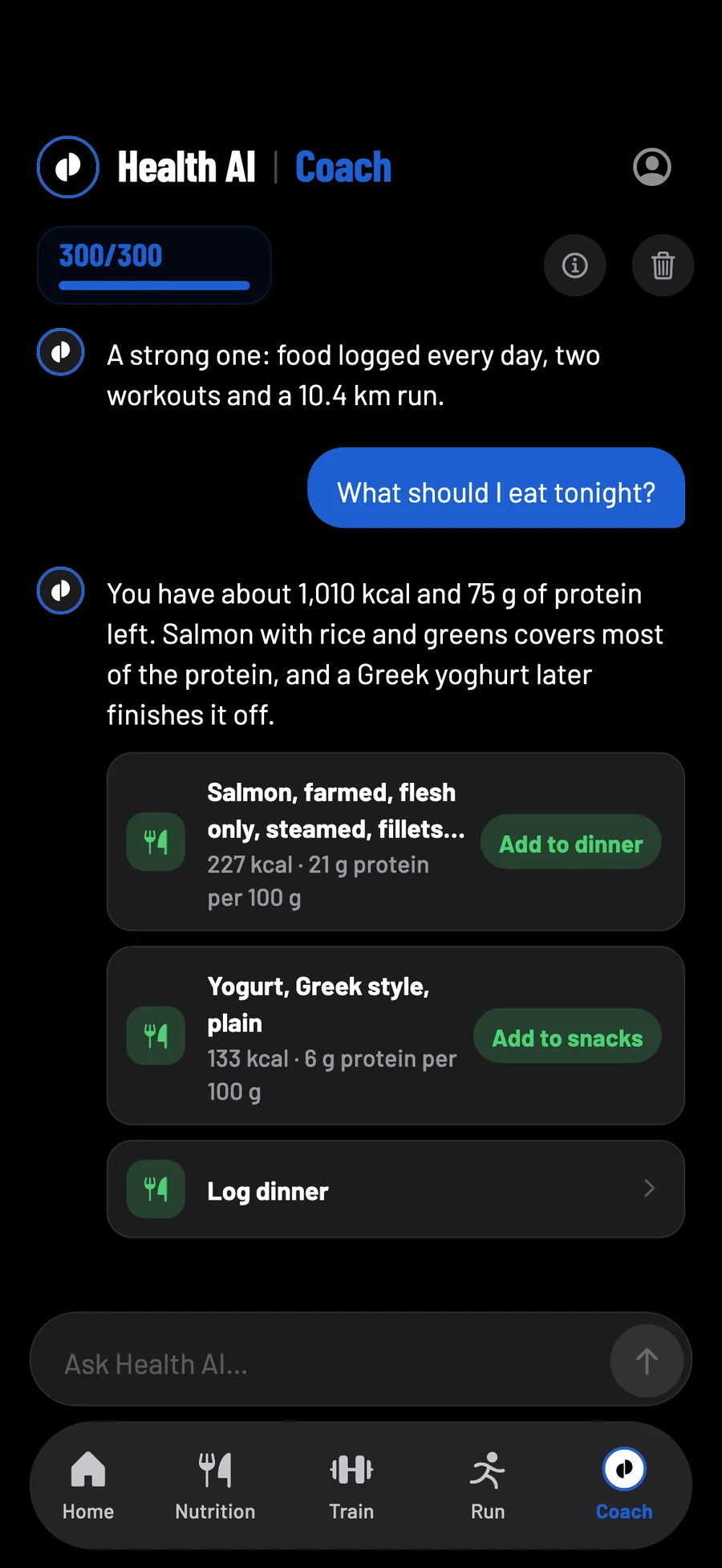
Ask what to eat for the protein you have left.
The coach reads your protein target and how much protein you ate each day for the last 30 days, today included. Ask what to have for dinner and the answer is about your numbers, not anyone's.
Its answers come with buttons that open the food, so you choose the portion before anything goes in your diary. It never logs anything by itself.
Privacy
Your food log stays yours.
No adverts or trackers
Nothing in the app follows you to other apps or websites, and this website loads nothing from anyone else.
On your phone first
Everything you log is written to your phone first, and the built-in foods search with no signal. Scanning and the coach need a connection.
Kept in London
Signed in, your log is copied to your account, stored in London, so a new phone gets it back.
Take it with you
Your food log exports whenever you like, every entry's protein included.
Pricing
How much does it cost?
Three days free, then £9.99 a month for everything: protein, calories, training, runs and the coach. One plan, no higher tier.
Cancel in your Apple account at least a day before the three days are up and you are not charged at all.
- Meal and label scans — 200 a month, 30 in the trial
- Barcodes and search — never use a scan
- The coach — 300 messages a month, 50 in the trial
- Apple Watch, widgets and Apple Health
If you stop paying
Logging by hand and scanning barcodes keep working, and everything you logged stays yours. Meal scans, label scans and the coach need the subscription.
One free trial per Apple ID. After it, £9.99 a month, renewing monthly until you cancel.
Questions
Protein tracking, answered.
Is there a free protein tracker app?
Many are free with adverts, or free with a paid tier. Health AI is three days free, then £9.99 a month, with no adverts at all. If you stop paying, logging by hand and scanning barcodes keep working, and everything you logged stays yours.
What is the best protein tracker app?
The one you will keep using. If protein is all you want to count, a single-purpose app may be enough. Health AI is for people who also count calories, lift or run: one diary, one subscription, and a coach that has read all of it.
How much protein do I need a day?
The UK's Reference Nutrient Intake for adults is 0.75 g per kilogram of body weight a day, about 56 g for men and 45 g for women. For athletes, the American College of Sports Medicine suggests 1.2 to 2.0 g per kilogram. If you are pregnant, breastfeeding, or have kidney disease or another medical condition, ask your GP or a dietitian.
Can an app count protein from a photo?
It can estimate it. Health AI's scan works out the whole plate's protein from what it can see, with a note on what was hardest to judge, so you know when to check the portion. For anything packaged, the barcode or the label gives you the maker's own figures instead.
Can I set my own protein target?
Yes, in Nutrition → Settings → Protein. Type any number, and anything under 0.8 g per kilogram of your weight is raised to that floor. A target you set stays as it is when you log a new weight, and Reset to recommended puts you back on the Balanced split.
Does it work on Apple Watch?
Yes. The watch shows today's protein as a ring and a bar, beside your calories. Logging food happens on your iPhone.
Does it know UK foods?
Yes. It has 2,854 foods from CoFID, the UK government's food composition tables, and it scans barcodes against Open Food Facts, which lists many products sold in the UK.
Every gram, counted for you.
Protein, calories, training and runs in one app, with a coach that has read all of it.
- 3 days free
- Then £9.99 a month
- Cancel any time in your Apple account